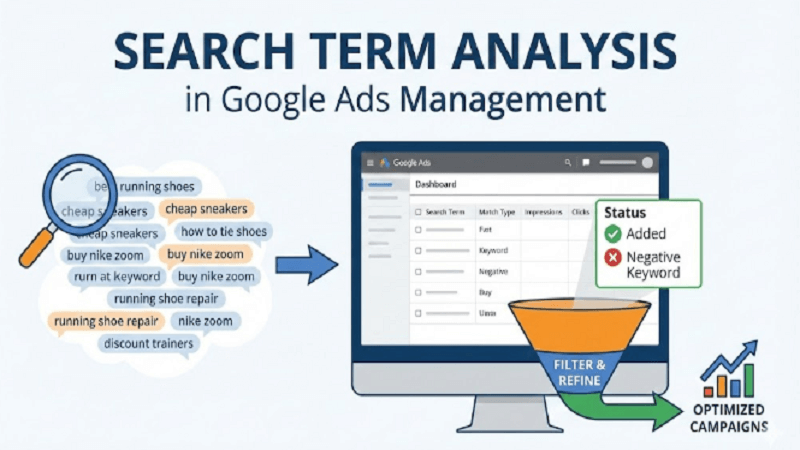
Ever wonder what people are really looking for when they type something into Google? For anyone running pay-per-click (PPC) campaigns, this is critically important. While you might bid on specific keywords, the actual search terms users type can be very different.
Diving deep into search term analysis isn’t just good practice; it’s like having a secret decoder ring for user behavior. It reveals everything from their immediate needs to where your ad budget might be quietly slipping away. Proper Adword Management Services use this analysis to optimize campaigns and ensure every dollar works effectively.
What Search Terms Show
Think of your search term report as a direct line into the minds of your potential customers. It shows the actual queries that triggered your ads, not just the keywords you selected. This distinction is crucial and often reveals both opportunities and challenges in your PPC campaigns.
Intent Signals
The words people use in searches indicate intent. Are they browsing for information, comparing options, or ready to buy?
For example:
- “What is cloud computing” signals early-stage research.
- “Best cloud hosting for small business” shows a consideration stage.
- “Sign up for AWS free tier” indicates a readiness to take action.
Understanding these nuances allows you to tailor ad copy, landing pages, and campaign strategy. It helps you speak directly to the user’s immediate need, boosting relevance and conversion rates. Intent analysis is a fundamental aspect of smart Google Ads management.
Budget Leaks
Search term reports also reveal where ad spend is wasted. For instance, if you sell high-end coffee beans and bid on “coffee,” your ads might appear for irrelevant searches like “coffee mugs,” “coffee machine repair,” or “free coffee samples.” Each click on these terms is a small budget leak.
Ignoring these leaks can add up to significant losses over time. Professional Adword Management Services excel at identifying and plugging these holes, ensuring every dollar works as hard as it can.
Optimization Using Data
Understanding is only half the battle. The real power of search term analysis comes from turning insights into actionable optimization. This is an ongoing, iterative process that keeps campaigns efficient and effective.
Add / Remove Keywords
Search term analysis allows you to refine your keyword list:
- Add Keywords: Discover hidden long-tail search terms that are highly relevant and less competitive. For example, if you bid on “digital marketing agency” and see “SEO services for dentists in Seattle” in your report, it’s a prime candidate for a new targeted keyword. These terms improve quality scores and ad positions.
- Remove Keywords: Identify irrelevant terms that waste budget. Adding these as negative keywords ensures ads aren’t shown to uninterested audiences. For example, a luxury watch seller might add “free,” “repair,” or “replica” as negative keywords. This reduces waste, improves click-through rates, and boosts conversions.
A strong negative keyword strategy is just as important as selecting positive keywords. Continuous optimization ensures campaigns remain lean, relevant, and high-performing. HubSpot frequently highlights that granular data analysis, like search term reports, is essential for maximizing ROI.
Key Takeaways
- Search term analysis provides unfiltered insights into actual user behavior.
- It helps identify user intent and align ad copy and landing pages with the buyer journey.
- Reports reveal “budget leaks” by showing irrelevant search terms.
- Optimization involves adding new high-potential long-tail keywords and strategically negating irrelevant terms.
- Continuous analysis is vital for maintaining efficient, high-performing PPC campaigns.
Conclusion
In the dynamic world of online advertising, staying ahead means understanding your audience at a granular level. Search term analysis isn’t just a report to glance at; it’s a diagnostic tool and roadmap for continuous improvement. By consistently reviewing what users are searching for, you can refine campaigns, eliminate waste, and connect more effectively with those genuinely interested in your offerings. It’s about working smarter and ensuring every ad dollar is invested wisely for maximum impact